


The Ultimate Guide to Gymnastic Rings: Benefits, Exercises & How to Choose the Right Setup

Updated 8 October 2026
Two rings. Plenty of ways to challenge yourself. The trick is choosing a setup you’ll actually use — then starting with movements you can control.
What are gymnastic rings — and why use them?
Gymnastic rings are two rings suspended from adjustable straps. Each ring moves independently, so keeping the movement steady becomes part of the exercise.
Control every rep
Rows, pushes and holds challenge you to manage both your body and the rings.
Change the challenge
Adjust ring height, body angle or foot support to find a version you can control.
Pack it away
A compact set fits around home or park training, provided you have a suitable anchor.

Choose your gymnastic rings in three steps
1. Start with where you’ll train.
Dry indoor space
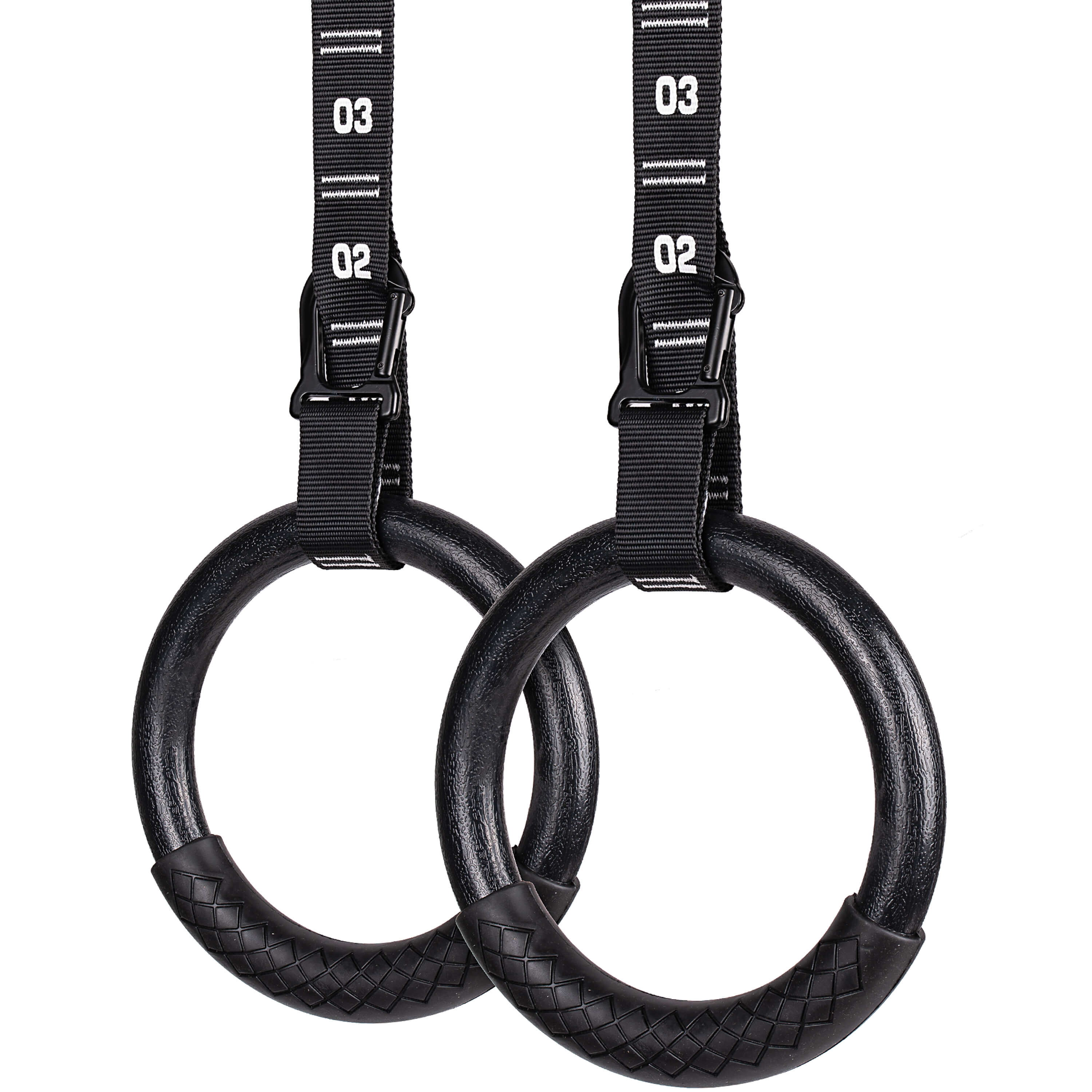
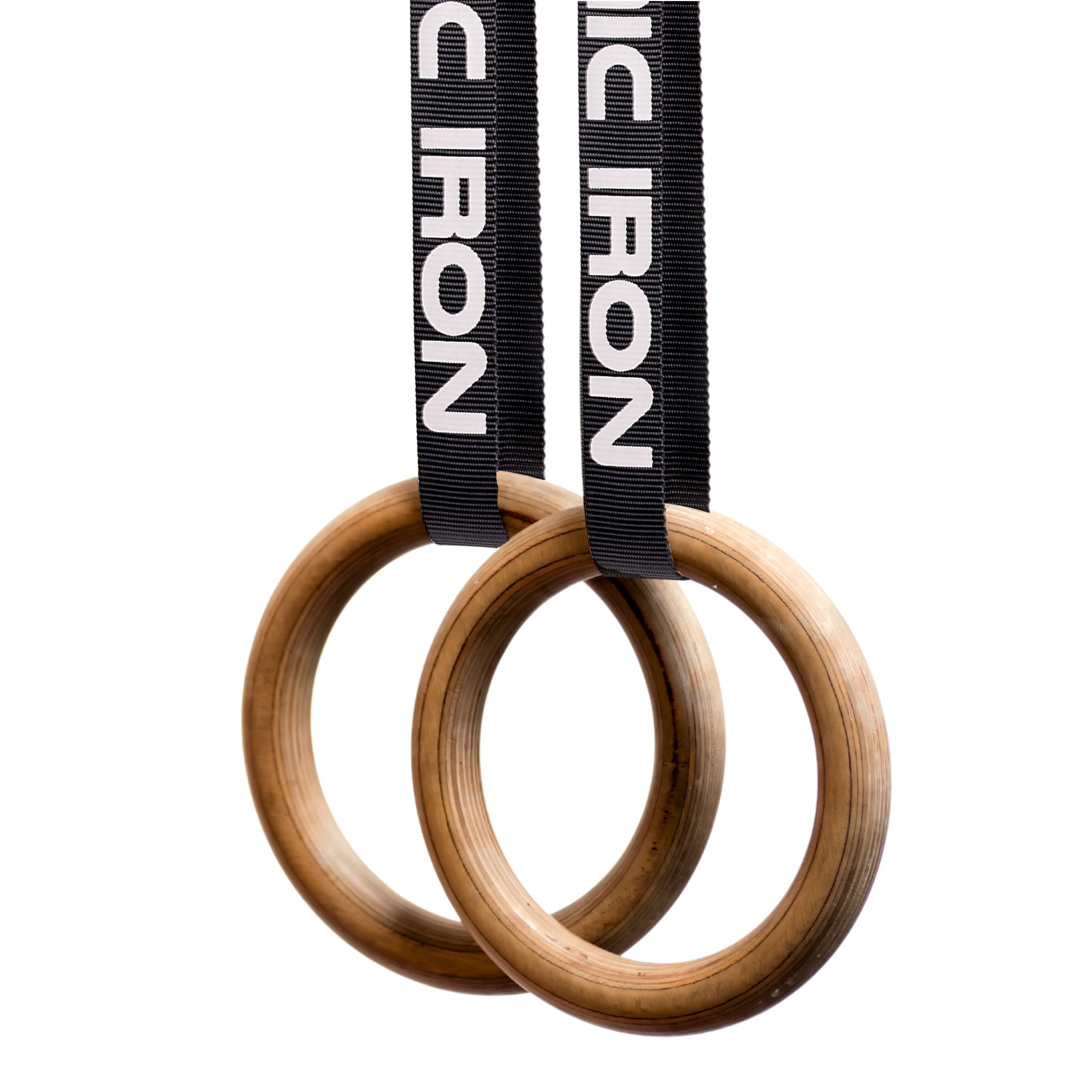
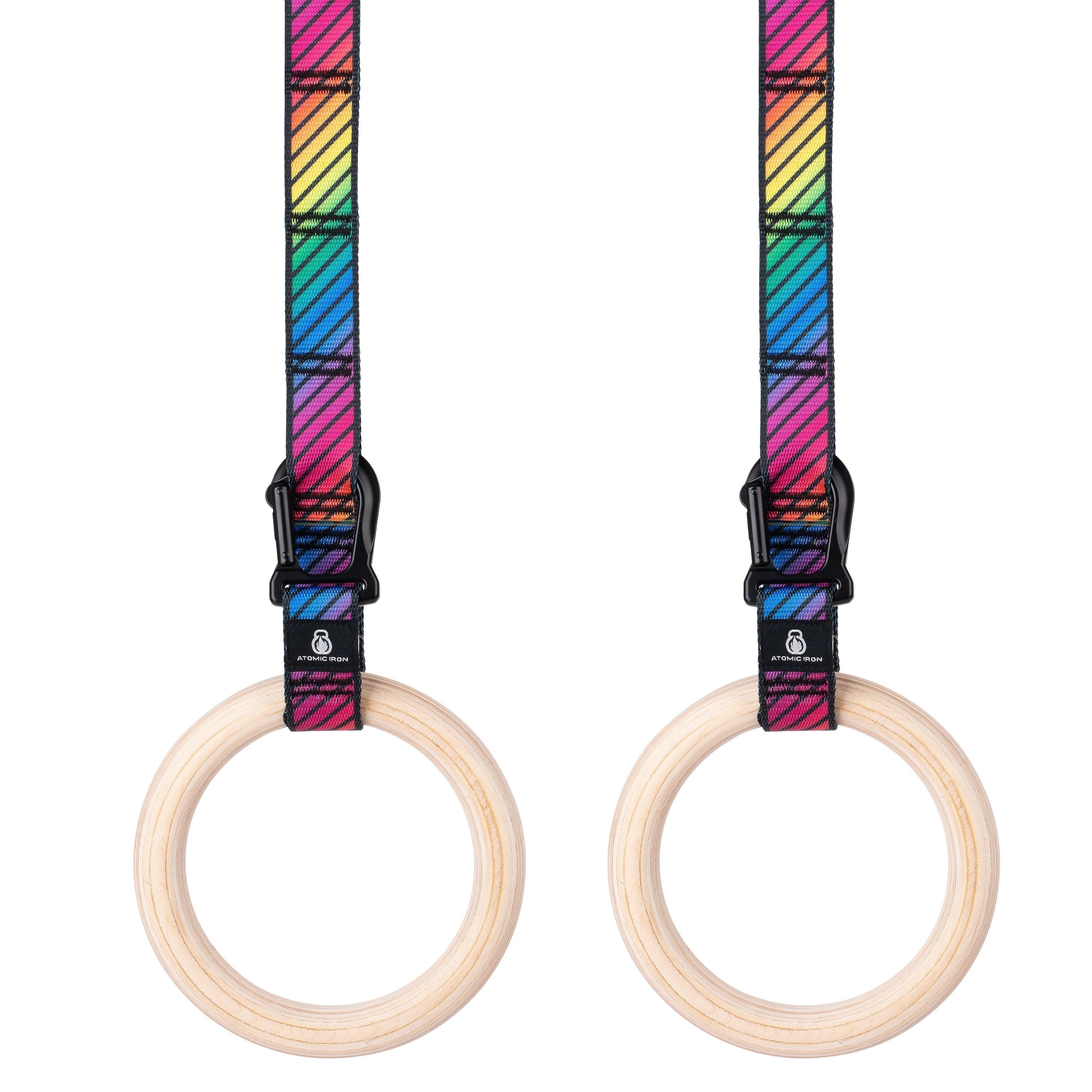
Birch wood has a smooth, uncoated feel. Keep wooden rings dry and store them indoors.
Explore wooden rings →Regular outdoor sessions
Choose outdoor plastic rings, or Premium Outdoor rings with a rubber grip surface. Follow the care instructions and store straps dry.
Explore outdoor rings →2. Choose your grip. These sizes describe the thickness of the part you hold.
28 mm
Slimmer grip.
Our starting recommendation if you’re unsure.
32 mm
Fuller grip.
Choose it if you prefer a thicker hold.
Compare 28 mm and 32 mm rings →
3. Pick your strap system. Low for push-ups, higher for pull-ups: all three let you change ring height.

Standard
Slide the strap through a cam buckle for continuous height adjustment.

Numbered
Cam buckles, plus reference marks to help you repeat a height at the same anchor.

Quick-Adjust
Move carabiners between attachment points. Adjustment is in fixed steps.
See the home-workout buying guide →
How to set up gymnastic rings
- Check the anchor. Use a rack, bar or mount designed and installed for your ring exercises. Follow its manufacturer’s guidance; get qualified installation advice if unsure.
- Fit and level the rings. Follow the strap instructions, secure the connections and inspect the rings, webbing, stitching and hardware.
- Check the space. Allow room for the full movement, including floor space and headroom. Strap length is not the same as usable hanging height.
Choosing rings for your home workout space →
Gymnastic rings exercise chart
Use this as a map of the options. Choose a level you can control and develop the foundations before attempting advanced skills.
Start with support
Ring rows
Keep your feet planted and begin fairly upright.
Incline ring push-ups
Raise the rings to make the angle easier.
Assisted holds
Use your feet to take some of the load.
Build the basics
Pull-ups · dips · L-sits
Work towards these as your strength and control develop. Full bodyweight versions are a step up from assisted work.
Explore later
Muscle-ups · levers · planche progressions
These are advanced skills with their own prerequisites, not first-session exercises.
View the full illustrated exercise chart

Ready for your first session? Start here →
Three habits worth keeping
- Level the rings before each session.
- Change one thing at a time: body angle, assistance or exercise difficulty.
- Finish while you still have control. Stop an exercise if it causes pain.
What else do you need?
A set of rings and a suitable anchor are the essentials. Chalk can help with sweaty hands where your venue permits it. Parallettes add a stable surface for floor-based pushing and holds; hand grips are an optional choice for palm coverage.
Explore training accessories →
Quick answers
Are gymnastic rings good for beginners?
Yes, with a suitable setup and an appropriately scaled exercise. Start with foot-supported work rather than assuming you need a pull-up first.
Can you build muscle with rings?
Ring exercises can be part of a strength-building programme. Results depend on the challenge, training, recovery and nutrition — not the equipment alone.
Are rings better than weights?
They offer different training options. Rings add independent movement and bodyweight progressions; weights make external load easier to adjust.
How high should rings be?
That depends on the exercise and your body position. You need lower settings for floor-based work and enough height and clearance for pulling movements.